
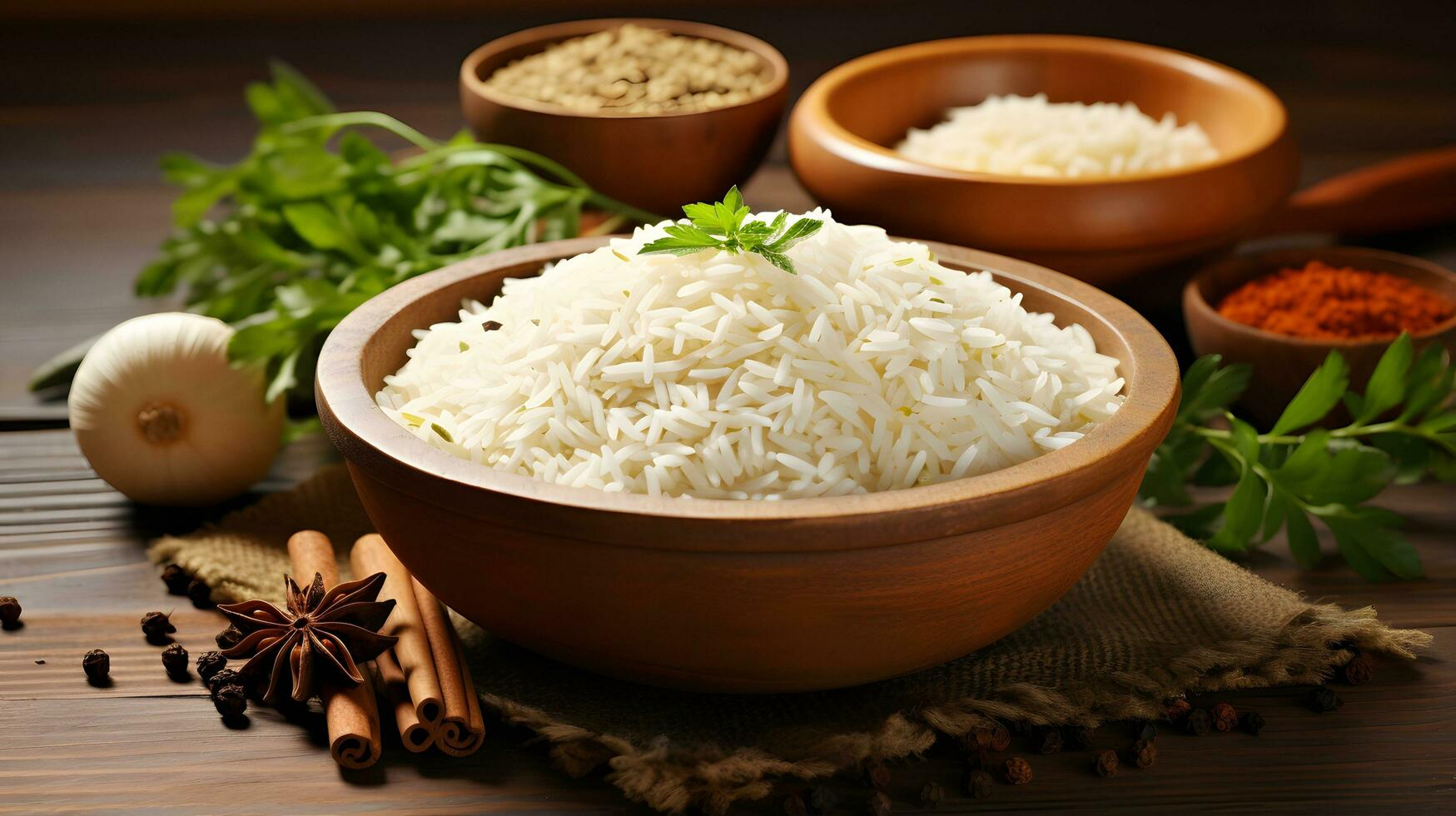
Basmati rice is a long-grain aromatic rice variety traditionally grown in the Indian subcontinent, particularly in the foothills of the Himalayas. The word “basmati” means “fragrant” in Sanskrit, which reflects its distinctive aroma and delicate flavor. Basmati rice is known for its slender grains that elongate significantly when cooked, remaining separate and fluffy rather than sticky. Its light texture and subtle nutty taste make it a preferred choice for a wide variety of traditional and modern dishes.
Basmati rice is available in white and brown varieties. White basmati rice is milled and polished, offering a soft texture and quick cooking time, while brown basmati rice retains the bran layer, providing more fiber and nutrients. It is widely used in Indian, Middle Eastern, and Persian cuisines, especially in dishes like biryani, pulao, and pilaf.
Basmati rice is valued worldwide for its aroma, texture, nutritional benefits, and versatility. Whether used in traditional recipes or modern cuisine, it remains one of the most popular rice varieties globally.
Benefits
- Rich source of carbohydrates for energy
- Lower glycemic index compared to regular white rice
- Easy to digest
- Naturally low in fat
- Gluten-free grain option
Basmati rice is considered one of the premium rice varieties in the world due to its unique fragrance, extra-long grain structure, and superior cooking quality. It is traditionally cultivated in specific regions with fertile soil and suitable climate conditions, which contribute to its distinctive characteristics. Authentic basmati rice is often aged for several months to enhance its aroma and improve its cooking performance. Aging helps reduce moisture content, allowing the grains to expand more and remain separate after cooking.
One of the most noticeable qualities of basmati rice is its aroma, which is often described as nutty or popcorn-like. This natural fragrance comes from a compound called 2-acetyl-1-pyrroline, which is present in higher amounts in basmati rice compared to other varieties. This aroma makes it ideal for special dishes and festive meals.
Basmati rice is also valued for its cooking properties. When properly rinsed and soaked before cooking, the grains become longer and fluffier. Unlike sticky rice varieties, basmati rice remains light and separate, making it perfect for layered rice dishes such as biryani. Its ability to absorb flavors from spices, herbs, and broths makes it highly versatile in culinary applications.
High-quality basmati rice should have long, slender, unbroken grains with a pleasant natural aroma. It should be stored in an airtight container in a cool, dry place to prevent moisture and pest contamination. Proper storage helps maintain freshness and cooking quality for a long time.