
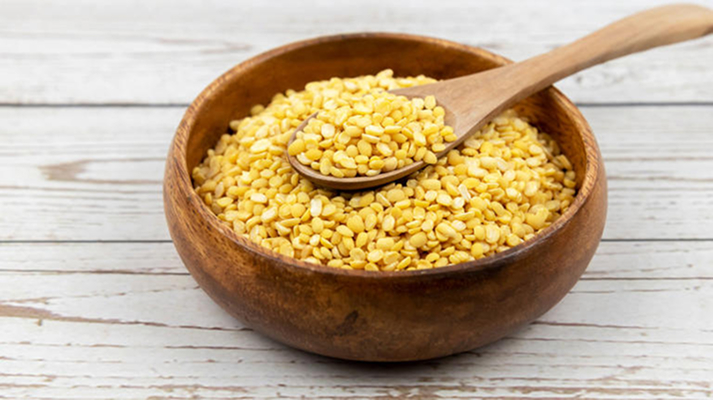
Moong Dal, also known as green gram lentils (Vigna radiata), is a highly nutritious and widely consumed legume in India and many parts of Asia. It is available in several forms: whole green moong beans, split green moong dal (with skin), and yellow moong dal (skin removed). Moong Dal has a mild, slightly sweet flavor and soft texture when cooked, making it versatile for soups, curries, porridge, and desserts.
This legume is prized for its high protein content, dietary fiber, and essential vitamins and minerals. It is rich in folate, potassium, magnesium, iron, and B-complex vitamins, making it suitable for vegetarians, vegans, and anyone seeking a nutrient-dense food source. Moong Dal is naturally low in fat, cholesterol-free, and gluten-free, making it ideal for heart-healthy and weight management diets. Its easy digestibility makes it suitable for all age groups, including children, the elderly, and those recovering from illness.
Moong Dal can be used in a variety of ways: boiled for curries and soups, cooked into porridge or khichdi, ground into flour for pancakes or fritters, or sprouted to enhance nutritional value. Sprouted moong dal is particularly rich in antioxidants, vitamins, and minerals, and is often added to salads, sandwiches, and wraps. Its mild flavor pairs well with spices, herbs, vegetables, and grains, making it a versatile ingredient in traditional and modern cuisines.
Moong Dal is a highly nutritious, protein-rich, and easily digestible legume that supports heart health, digestive health, blood sugar control, bone strength, and overall wellness. Its mild flavor, soft texture, and versatility make it a staple in Indian kitchens and a valuable ingredient in global cuisines.
- High in Protein – Supports muscle growth, repair, and overall body functio
- Rich in Dietary Fiber – Promotes digestive health and regular bowel movements.
- Heart Health – Helps maintain healthy cholesterol and blood pressure levels.
- Blood Sugar Regulation – Low glycemic index makes it suitable for diabetics.
- Weight Management – Fiber and protein help control appetite and promote satiety.
Moong Dal, also called green gram (Vigna radiata), is a small, oval-shaped legume that is highly valued in Indian and Asian cuisines for its nutritional richness and versatility. It is available in multiple forms: whole green moong beans, split green moong dal (with skin), and yellow moong dal (skin removed). Each form has unique culinary applications, but all are packed with protein, fiber, vitamins, and minerals.
The whole green moong beans are typically used in salads, soups, and sprouted preparations, while the split or yellow moong dal is preferred for quick-cooking dals, khichdi, and porridge. Moong dal has a mild, slightly sweet flavor that blends well with spices, herbs, and vegetables, making it adaptable for both traditional and modern recipes. It softens easily during cooking, which allows it to be incorporated into creamy dishes, soups, and purees.
Nutritionally, moong dal is a powerhouse of plant-based protein, essential for vegetarians and vegans. Its high dietary fiber content supports digestive health, regulates bowel movements, and helps control cholesterol levels. It is also low in fat, cholesterol-free, and gluten-free, making it suitable for heart-healthy, weight-conscious, and gluten-sensitive diets. The dal is rich in essential nutrients such as folate, potassium, magnesium, iron, and B-complex vitamins, which support energy production, brain function, and overall wellness.
Moong dal is also highly versatile in preparation methods. It can be boiled, cooked in soups or stews, ground into flour for savory pancakes (cheela) and fritters (pakoras), or sprouted to boost nutritional content. Sprouted moong dal is especially rich in vitamins, antioxidants, and minerals, and is commonly used in salads, wraps, or mixed with vegetables for a nutritious snack. Its light and easily digestible nature makes it suitable for all age groups, including children, elderly individuals, and those recovering from illness.