
Red Masoor Dal, also known as red lentils (Lens culinaris), is a small, orange to reddish-colored legume that is widely consumed in Indian and global cuisines. It is naturally split and hulled, which means the outer skin is removed, allowing it to cook quickly without prior soaking. Red Masoor Dal has a soft texture when cooked and a mildly nutty flavor, making it ideal for soups, dals, stews, and purees.
This dal is highly nutritious and is an excellent source of plant-based protein, dietary fiber, complex carbohydrates, and essential vitamins and minerals. It contains iron, folate, magnesium, potassium, and B-complex vitamins, which support overall health, energy production, and cognitive function. Red Masoor Dal is naturally low in fat, cholesterol-free, and gluten-free, making it suitable for heart-friendly diets, weight management plans, and diabetic-friendly meals.
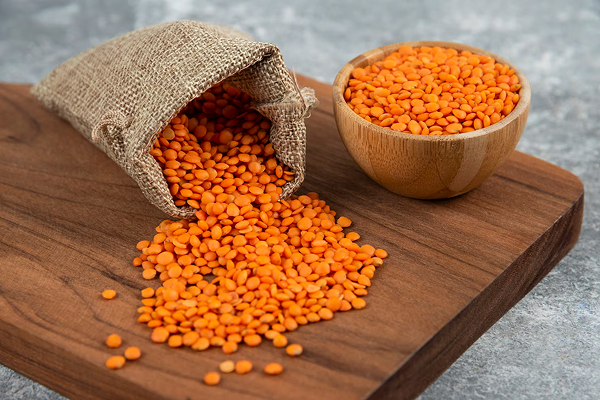
Red Masoor Dal is versatile in cooking. It can be boiled and cooked into traditional Indian dal with spices, mixed into soups and stews, mashed into purees, or used in fusion dishes such as lentil-based patties, salads, or casseroles. Its soft texture allows it to blend well with vegetables, herbs, and spices, producing creamy and flavorful meals. It is also suitable for sprouting, which increases its vitamin and antioxidant content while improving digestibility.
Red Masoor Dal is a highly nutritious, fast-cooking, and versatile legume that supports heart health, digestive health, blood sugar regulation, bone health, and overall wellness. Its mild flavor, soft texture, and adaptability make it a staple in Indian kitchens and a valuable ingredient in global cuisines.
Red Masoor Dal, commonly known as red lentils (Lens culinaris), is a small, split legume with a vibrant reddish-orange color. It is naturally hulled and split, which allows it to cook quickly without soaking, making it a convenient and time-saving choice for everyday meals. The dal has a soft, creamy texture when cooked and a mild, slightly nutty flavor that blends well with spices, herbs, and vegetables. Its versatility makes it a staple in Indian households, as well as a popular ingredient in global cuisines.
Red Masoor Dal is nutritionally rich, offering a high concentration of plant-based protein, dietary fiber, and complex carbohydrates. It is packed with essential vitamins and minerals, including folate, iron, magnesium, potassium, and B-complex vitamins, which support energy production, cognitive function, and overall wellness. Being naturally low in fat, cholesterol-free, and gluten-free, red masoor dal is ideal for heart-friendly diets, diabetic-friendly meals, and weight management plans.
In cooking, red masoor dal is highly adaptable. It is commonly used to prepare traditional Indian dals, khichdi (a mix of lentils and rice), soups, stews, and purees. Its soft texture allows it to be easily blended for creamy gravies or mashed to thicken curries. It can also be sprouted, which increases its vitamin, mineral, and antioxidant content while improving digestibility. Sprouted red masoor dal is often incorporated into salads, wraps, and light snacks for added nutrition.
Red Masoor Dal is valued not only for its ease of cooking and flavor but also for its health benefits. It is light on the digestive system, making it suitable for all age groups, including children, elderly individuals, and people recovering from illness. It pairs well with rice, chapati, and a variety of vegetables and spices, making it a versatile ingredient for both traditional and modern dishes.