
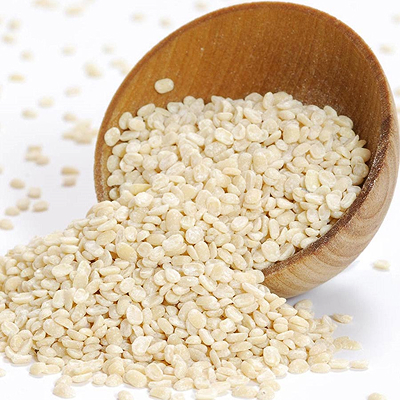
Urad Dal, also known as black gram (Vigna mungo), is a widely consumed legume in India and other parts of Asia. It comes in two main varieties: whole black urad dal with the skin intact and split urad dal, where the outer black skin is removed, revealing a white inner portion. Whole urad dal is glossy black on the outside and creamy white inside, while split urad dal is pale and cooks faster.
Urad Dal is highly valued for its nutritional profile. It is rich in plant-based protein, dietary fiber, essential vitamins, and minerals like iron, potassium, magnesium, calcium, and folate. Its high protein content makes it an important part of vegetarian and vegan diets. Urad dal is also low in fat, cholesterol-free, and gluten-free, making it suitable for heart-healthy diets, weight management, and individuals with gluten sensitivity.
Culinarily, urad dal is versatile. It is a key ingredient in Indian recipes such as dal makhani, idli, dosa, vada, and papad. Whole urad dal is ideal for slow-cooked curries, while split urad dal is commonly used to prepare batters for idli and dosa. Urad dal has a mild, earthy flavor that absorbs spices well, enhancing the taste of various dishes. It can also be sprouted, which improves digestibility, increases antioxidant levels, and boosts vitamin content.
Urad Dal, also called black gram (Vigna mungo), is a highly valued legume in Indian cuisine and other Asian culinary traditions. It is available in different forms: whole black urad dal (with skin intact), split urad dal (dehusked), and powdered urad dal flour. Whole urad dal has a shiny black exterior with a creamy white interior, while split urad dal is pale and softens quickly during cooking. The dal has a mild, earthy taste and a slightly nutty flavor that complements a wide range of dishes.
- High in Protein – Supports muscle growth, repair, and overall body health.
- Rich in Dietary Fiber – Promotes healthy digestion and prevents constipation.
- Rich in Dietary Fiber – Promotes healthy digestion and prevents constipation.
- Blood Sugar Regulation – Helps manage diabetes due to its low glycemic index.
- Blood Sugar Regulation – Helps manage diabetes due to its low glycemic index.
Urad Dal is packed with nutrients. It is an excellent source of plant-based protein, dietary fiber, essential minerals like iron, magnesium, potassium, calcium, and folate, and vitamins such as B-complex vitamins. These nutrients support energy production, immune health, brain function, and overall wellness. Its low-fat, cholesterol-free, and gluten-free properties make it suitable for heart-friendly, diabetic-friendly, and weight-conscious diets.
Culinary uses of urad dal are extensive. Whole urad dal is often slow-cooked in creamy dals like Dal Makhani or used in hearty soups and stews. Split urad dal is a key ingredient in batters for idli, dosa, and vada, which are fermented to create soft, fluffy, and flavorful dishes. Urad dal flour is used in papads, dhokla, and as a thickening agent in gravies. Additionally, sprouting urad dal increases its vitamin and antioxidant content, improves digestibility, and provides a crunchy, nutrient-rich addition to salads, wraps, and snacks.